Hythe station updates
Information on changes at our Hythe ambulance station.
Latest position
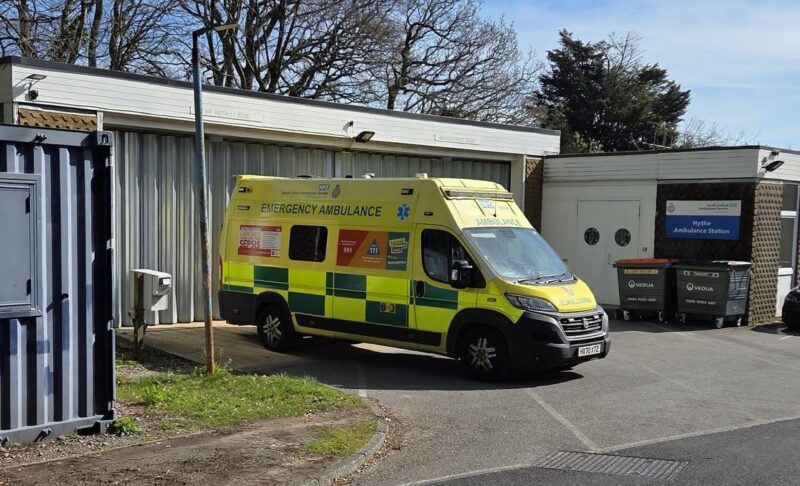
From 2 November 2026, crews previously based at Hythe Ambulance station have been reassigned to rotas starting from Lymington and Nursling stations. The change addresses several challenges we faced with maintaining Hythe as a base station.
There is no reduction in the number of crews operating in the Southampton and South West Hampshire sector because of this change, and we believe relocating the Hythe crews to other larger stations in the area will strengthen our ability to respond across the whole sector.
The Hythe ambulance station is over 40 years’ old and is unsuitable for delivering a modern ambulance service. The building and the size of the site is not suited to future needs. The cost of repair and improvement needed to meet operational and staff welfare requirements exceeds the value of the property.
Its condition and location has also made recruitment difficult, and its size, in terms of crews based there, creates rostering challenges with sickness or other short-term absence impacting planned shifts.
We recognise there is some local concern about the changes. We have made a commitment to local representatives that a stand-by point will be retained in the Hythe area and no final decisions on the future of the Hythe station site will be taken until a pilot of the stand-by model has been analysed.
The initial pilot period will be three months (November 2026 to January 2027). No further changes will be made until results have been internally reviewed and discussed with local representatives. In reviewing the pilot, we will compare the stand-by model with the base station model across indicators including response times and crew/vehicle availability.
Operating model for modern ambulance services
We recognise the importance people place on local NHS services and the visibility of healthcare services in their immediate area. However, it is important to understand how ambulance services operate in today’s environment and how we respond across our entire geography.
With rising demand and extended scope of the care provided, ambulance services have changed significantly from when small local stations like Hythe were first established.
We now divide the whole South Central Ambulance Service area into six geographic sectors. Hythe ambulance station is part of our Southampton and South West Hampshire sector. The sector includes five stations:
- Hightown
- Hythe
- Lymington
- Nursling, and
- Ringwood.
Crews based at all stations collectively respond to incidents across the sector. No crew is ringfenced to serve a specific local area. Clinical priority of patients needing a response determines where crews are sent.
At any given point in the day/night most crews on shift will be mobile. As such, response times are driven by the position of active crews around our entire footprint, rather than the location of ambulance stations.
A typical shift for ambulance crews
The vast majority of our crews are out on the road throughout their 10-12 hour shift – moving from one incident to the next rather than returning to station after each call.
Once a crew is logged on at the start of their shift they are normally dispatched to their first patient within minutes. When a call ends, they are dispatched to their next patient based on their location at that time.
A call may end with:
- Providing care on scene and not needing to take a patient to hospital.
- Taking the patient to the nearest A&E or other local service.
- Taking a patient with more serious injuries/illnesses to a specialist regional unit.
Crews rarely return to their base station during a shift. They may return for a meal break but may also take their meal break at another station if it is closer when their break is due.
This means the location of ambulance stations has limited impact on response times to individual incidents. The exceptions being if the very first call of a shift happens to be a local address.
The stand-by point model
We have stand-by points across our entire geography. If there are periods of lower demand a crew may be directed to a stand-by point rather than immediately responding to their next patient. These are decisions made by the dispatch teams in our control rooms based on the distribution of all resources at the time.
For the Hythe stand-by model:
- At the start of early and late shifts, an ambulance crew from Lymington station will be directed towards the Hythe stand-by point.
- During shifts, if demand permits and the distribution of all crews across the sector warrants it, a crew will be directed towards the Hythe stand-by point.
To be open and manage expectations, an ambulance may not be located at the stand-by point very often. This is no different from the model when crews started their shift from Hythe, as described in the typical shift section above.
Further background
Below are copies of correspondence we have provided to local representatives.
| Title | File Size | Link |
|---|